
LAZULLIS
Desenvolvimento Sustentado





Sobre nós
Orientados pela reflexão e gestão executiva consolidada, em 30 anos de experiência profissional quer em novos projectos “start-up.s”, quer em operação estabilizada, em ambiente multinacional e de Pequenas e Médias Empresas nacionais, a LAZULLIS, desenvolve a sua actividade na partilha activa do seu conhecimento no apoio à gestão empresarial e de projectos, in situ nas empresas sobretudo PME’.s.
MISSÃO
Compromisso sem conceder, a princípios de ética e integridade, com total dedicação e comprometimento com as pessoas, para um desenvolvimento sustentado da economia e da sociedade.
VISÃO
Desenvolvimento, implementação, gestão de planos de negócio e iniciativas estratégicas, com foco na eficiência e na obtenção de resultados sustentáveis.
Serviços
Estratégia e gestão empresarial
Identificação dos objectivos empresarias das estruturas accionistas, para suporte ao desenvolvimento de novos negócios industriais, capacitação de estruturas existentes, recuperação de negócio.
Recolha, análise e avaliação de informação, no curto e longo prazo. Relatórios (baseados em informação).
Desenvolver/gerir Planos de Negócio resilientes, focados na reestruturação, adaptação de capacidades e valor acrescentado.
Gestão de projetos e sustentabilidade
Suporte ao processo de gestão empresarial, pela estruturação dos princípios estratégicos, identificação da iniciativas e acções estratégicas e operacionais.
Apoio à gestão e liderança de quadros e equipas multidisciplinares, com uma abordagem baseada, na confiança, espírito de equipa, conhecimento e experiencia adquirida in situ.
Compromisso sólido no relacionamento próximo com o cliente são facilitadores.



Sectores de actividade
Experiência e registo profissional na indústria Multinacional e PME.s, em mercados de elevada complexidade e competitividade de negócio internacional e nacional (empresas privadas, entidades governamentais, associações empresariais e reguladores).
Indústria marítimo portuária
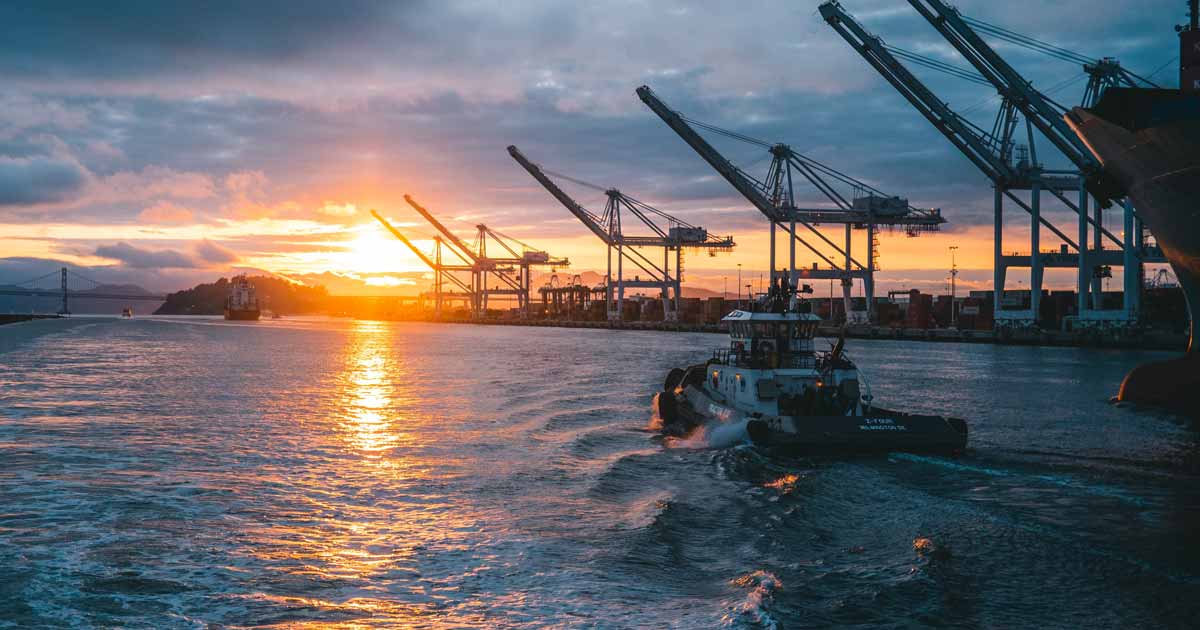
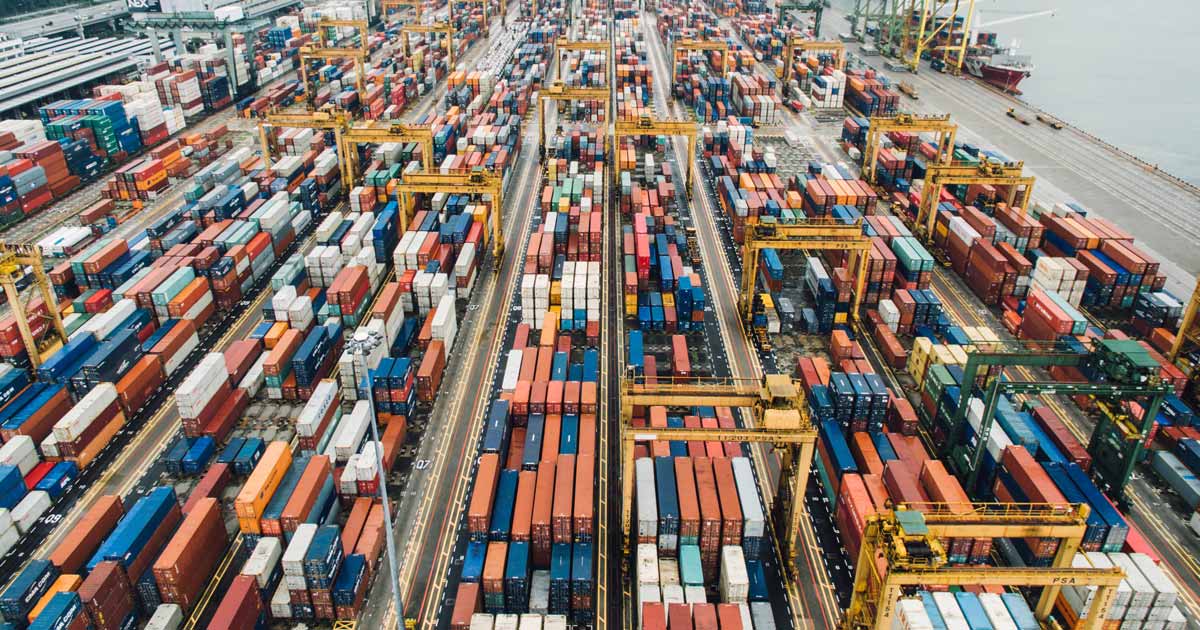
Estaleiro de Reparação Naval, Terminais Portuários, Reboque (portuário, costeiro e oceânico), Resgate e Salvamento marítimo, Combate a incêndios e controlo de poluição. Projectos Marítimos Offshore
Indústria metalomecânica
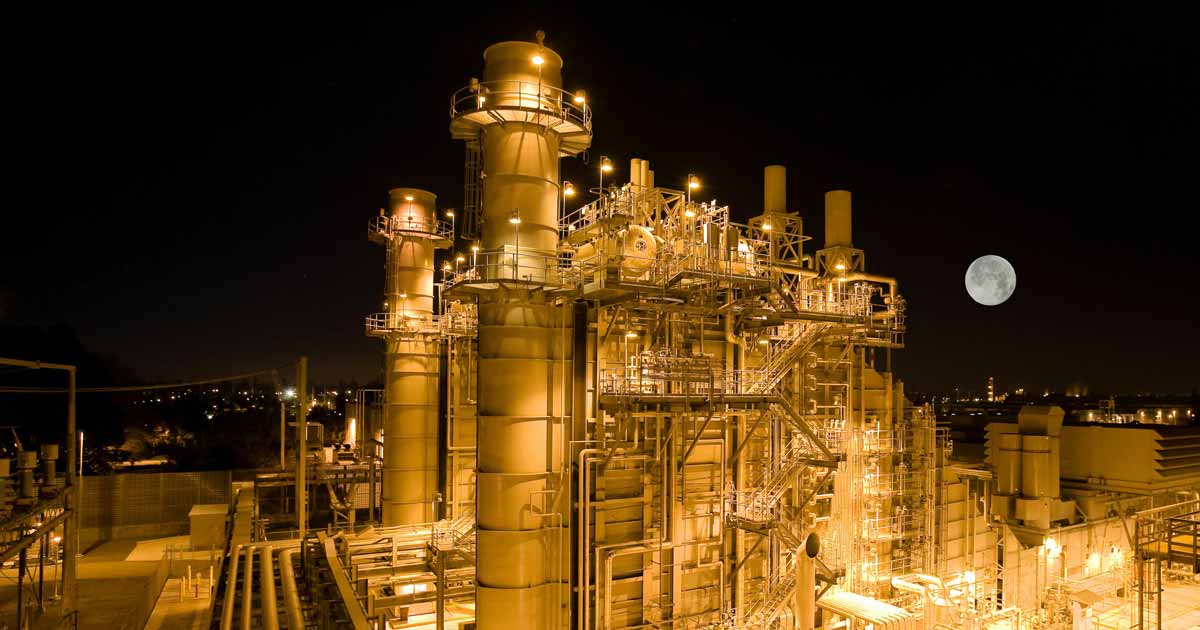
Fabrico/Manutenção (Metalomecânica, Tratamento anti-corrosivo) Infra-Estruturas Industriais: Marítimo, Transportes, Energia.
Construção Soldada/Estampagem_Injecção/Cunhos e Cortantes/Moldes na fabricação e montagem de peças e componentes.
Indústria automóvel
Fabrico, Montagem e Fornecimento de Componentes electrónicos e Plásticos.
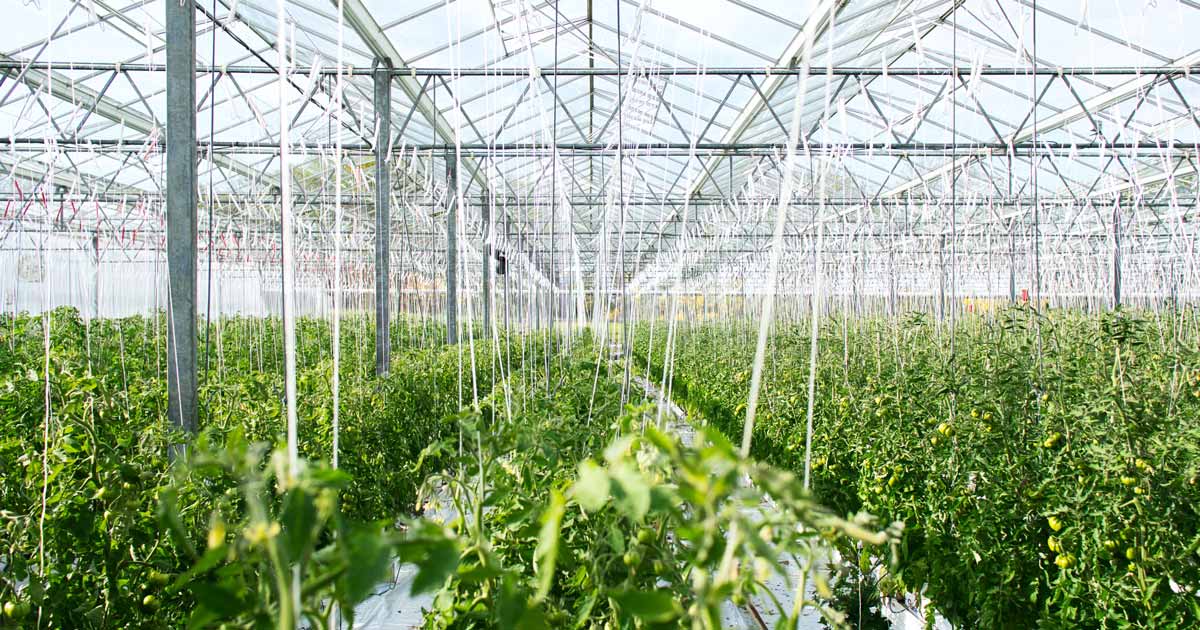
Reabilitação e manutenção de edifícios (urbanos e rurais). Sector agro-pecuário
Notícias
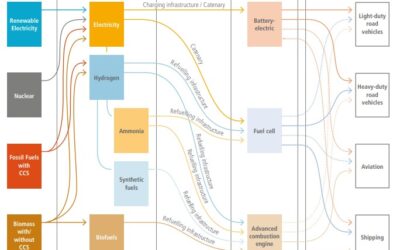
With globalization borders become almost virtual, but emissions over the last century were already global. One of the major challenges to assure the transport sector decarbonization lowering significantly emissions is associated with divergent actions being taken worldwide. As an example the net effective carbon rates increasingly diverge across countries (OECD Pricing GHG Emissions Report 2022). Many of the world large emitters continue to have low carbon prices. This is particularly important on the aviation and maritime sector.
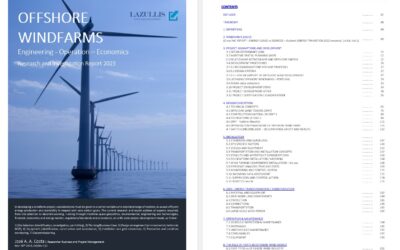
OFFSHORE WINDFARMS: PRINCIPLES AND ENERGY OUTLOOK REPORT
Engineering . Operation . Economics
José A. A. Costa – Mar 28th 2023, Edition 1/1
ABSTRACT
In developing a windfarm project, consideration must be given to a rather complex and extended range of matters, to assure efficient energy production and availability in respect with zero carbon goals. The current research and report address the majority of aspects required, from site selection to decommissioning, running through maritime space geopolitics, environmental, engineering and technologies, financial, economics and energy market, regulations/standards and procedures, on a life cycle project development mode, as follow:
1) Site Selection (identification, investigation, permitting), 2) Planning/Business Case, 3) Design arrangement (environmental, technical, MSP), 4) Equipment (identification, construction and acceptance), 5) Installation and grid connection, 6) Production and condition monitoring, 7) Decommissioning.
CONTENTS
OUTLOOK
TAXONOMY
1. DEFINITIONS
2. WINDFARMS BASICS
(Cross Ref. REPORT – ENERGY USAGE vs SOURCES – Outlook (ENERGY TRANSITION 2022 onwards) 1st Ed. Vol 1)
3. PROJECT ASSUMPTIONS AND DEVELOPMENT
4. DESIGN CONCEPTION
5. INSTALLATION
6. GRID – ENERGY TRANSFORMATION / TRANSPORTATION
7. OPERATION & MAINTENANCE
8. THE ROLE OF PORTS IN OFFSHORE WIND ENERGY
9. ECONOMICS
10. SCALING UP & DEPLOYMENT TECHNOLOGY
11. DECOMMISSIONING
12. ENERGY MARKETS
13. POLICIES, STANDARDS AND REGULATIONS
14. REFERENCES
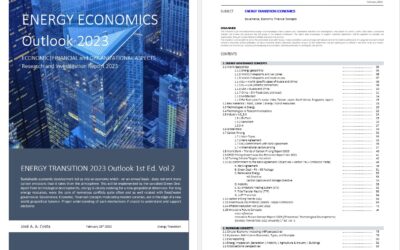
ENERGY ECONOMICS Outlook 2023
ECONOMIC|FINANCIAL and ORGANIZATIONAL ASPECTS
(ENERGY TRANSITION 2023) 1st Ed. Vol 2
Academic Research and Investigation Report · Feb 28th, 2023
ABSTRACT
Sustainable economic development led us into an economy which – on an annual basis – does not emit more carbon emissions than it takes from the atmosphere. This will be implemented by the so-called Green Deal. Apart from technological developments, energy is clearly evolving for a new geopolitical dimension. For long energy resources, were the core of numerous conflicts quite often and as well related with food/water governance. Governance, Economic, Financial concepts modulating modern societies, are in the edge of a new world geopolitical balance. Proper understanding of such mechanisms if crucial to understand and support decisions.
REPORT CONTENTS
1. ENERGY GOVERNANCE CONCEPTS
1.1 World Geopolitics
1.1.1 Energy geopolitics
1.1.2 World chokepoints and war zones
1.1.3 World chokepoints and trade routes
1.1.4 EU – World (specific cases of Russia and China)
1.1.5 EU – USA (Atlantic connection)
1.1.6 USA – Russia and China
1.1.7 China – Silk Trade (bely and road)
1.1.8 Middle East
1.1.9 Far East (specific cases: India, Taiwan, Japan, South Korea, Singapore, Japan)
1.2 Raw Materials | Food_Water | Energy: World Resources
1.3 Technologies vs Energy
1.4 Technologies vs Telecommunications
1.5 Industry 4.0_5.0
1.5.1 BioTech
1.5.2 NanoTech
1.5.3 AI
1.6 Global Risks
1.7 Carbon Pricing
1.7.1 Main Types
1.7.2 Paris Agreement
1.7.3 EU commitment with Paris Agreement
1.7.4 International carbon pricing
1.8 World Bank – Trends of Carbon Pricing Report 2020
1.9 OECD Pricing Greenhouse Gas Emissions Report Nov 2022
1.10 Turning Climate Targets into action
1.11 EU commitment to the Paris Agreement (Objectives – Carbon Tax – Emissions Trade)
A. Paris Agreement
B. Green Deal – Fit – 55 Package
C. Renewable Energy
H2 Directive
Carbon Capture and Storage Directive
D. Mobility
E. EU Emissions Trading System (ETS)
F. Title Transfer Facility (TTF)
G. JUST Transition
1.12 Carbon Pricing Trends 2022
1.13 Greenhouse Gas Protocol (GHGP) – Scope 3 Emissions
1.14 Inflation Reduction Act (USA) 2022
1.15 Innovative Future Concepts
cross reference
Innovative Future Concept Report 2023 ((Theoretical, Technological Developments)
(ENERGY TRANSITION 2022 onwards) 1st Ed. Vol. 3
2. ECONOMIC CONCEPTS
2.1 Circular Economy (including WEF perspective)
2.2 Hysteresis: Definition in Economics, Types, and Example
2.3 ESG Reporting
2.4 Energy impacts on: Generation | Mobility | Agriculture & Industry | Buildings
2.5 Cross sectorial perspectives
2.6 Transport Energy Strategies
2.7 Bunker Tax – Shipping
2.8 Environmental regulations vs Shipping Market
2.9 Nature of Energy International Contracts
2.10 International Contracts for Project Development
2.11 ISO13600 Series – Technical Energy Systems – Basic Concepts
2.11 Energy Networks (congestion security of supply)
2.12 Transmission Networks (European Network of Transmission System Operators – ENTSO)
2.13 Integration of Non-Dispatchable Renewables
2.14 Economics of coupling
2.15 Life Cycle concept and assessment
2.15.1 Steps of product/service life cycle
2.15.2 GHG Life Product Accounting and Reporting Standards
2.15.3 ISO14067 Greenhouse gases – carbon footprint of products
2.16 Anthropogenic GHG Emissions
2.17 Energy and Economy Worldwide (different approaches)
3. FINANCIAL CONCEPTS
3.1 Equity
3.1.1 Return on Equity (ROE)
3.1.2 Private Equity
Leveraged buyouts (LBOs)
Venture capital (VC)
3.2 Bonds vs Funds (cash)
3.3 Green Bonds
3.4 Green Funds
Types of green bonds
Criteria of green bonds
3.5 Green Washing
Green Washing in the Financial Sector
3.6 Bonds vs Stocks
3.7 EU Taxonomy
3.8 LCU Units (Country GDP characterization)
3.9 Financing Mechanisms of energy investment
3.10 Financial Disclosure Systems (document)
International Perspectives
International Conventions referring to Financial Disclosure
International Principles on Financial Disclosure
International Directives and Bodies related to Financial Disclosure
3.11 What are the IFRS Sustainability Disclosure Standards?
IFRS Sustainability Disclosure Standards Overview
3.12 What is Sustainability Reporting?
Selecting Sustainability Reporting Standards
Top 7 Sustainability Reporting Standards in 2022
3.13 Differences Between IFRS Sustainability Standards and Financial Accounting Standards
3.14 IFRS Sustainability Disclosure Standards Timeline
IFRS Sustainability Disclosure Content Requirements
3.15 Linking IFRS Sustainability Disclosure Standards to Financial Reporting
3.16 Fair Presentation Principles
IFRS for organizations in the earlier stages of their climate risk
Corporate Income Tax (CIT)
3.17 Corporate Tax Rates around the World, 2021
Europe
Taxes in Portugal
3.18 Crypto currency (Bitcoin and Others)
Blockchain and Mining
4. ENERGY COST ASSESSMENT
4.1 Cost concept
4.2 Cost Introductory Notes
ToT cost (Assets | Financial |Operational)
4.3 Levelized cost of electricity (LCOE)
4.4 Weighted average cost of capital (WECC)
4.5 Compound annual growth (CAGR)
4.6 Energy comparison costs (figures and charts)
4.7 Energy usage across the globe
4.8 Raw Materials and Energy Carriers
4.9 Fuel Technical Files
1. Physical / Chemical data – Production
2. Costs (Production, distribution, storage, life cycle)
3. Comparative assessment
4. Environmental
5. Legal Framework
6. Storage and Transportation
7. Other
4.10 Development
A. FOSSIL
A1. Petroleum
Crude Oil / Shale oil
A2. Coal
A3. Natural Gas
Technical data on propulsion systems
B. RENEWABLES ENERGIES
B1. Wind Power
Onshore
Offshore
cross reference
Offshore Windfarms 2023 – Engineering – Operation – Economics
Research and Investigation Report 2023
(ENERGY TRANSITION 2022 onwards) 1st Ed. Vol. 4
B2. Solar Power
B3. Hydropower
B4. Biofuels
B5. Geothermal
B6. Ocean
Thermal
Mechanical
Wave
Tidal
Currents
Chemical
Enhancing the business case of Oceans Energy
C. ALTERNATIVE FUELS
C1. Hydrogen
C2. Nuclear
5. REFERENCES
Lat 38º 43’52″ N | Long 009º 17’00″ W
2730 – 095 Oeiras
PORTUGAL
E-mail: empresa@lazullis.pt
website: www.lazullis.pt